Banking on BikeRescue

westpac.jpg

Westpac Foundation, through the Community Grants program, has enabled two BikeRescues! The Foundation offers grants to not-for-profit organisations and social enterprises, specifically those taking fresh approaches to solving Australian’s complex social problems. Dismantle makes a pretty slick fit, and we’re excited to already be putting the money to work helping out kids doing it tough.

Half of the grant is going to a BikeRescue for vulnerable young people aged 16-20 from Foyer Oxford, a housing and support service. Foyer Oxford is part of the international Foyer Movement and is a special kind of awesome. The idea is to put young people in tough spots in the centre of things, not out in the fringe suburbs, and support them with educational and training opportunities while creating an ‘aspirational’ community around them. Over time, the residents secure sustainable employment and independent accommodation, creating the positive outcomes for the long term. We are very proud to partner with such a forward thinking program.

Foyer Oxford is located in a beautifully designed building on Oxford Street in the heart of Leederville, right next to the CBD. It’s is run by a consortium of three organisations: Foundation Housing Ltd, Anglicare WA and North Metropolitan TAFE. Together, they offer 98 residents housing and support, as well as access to a diverse range of education and work opportunities.

Westpac’s support has allowed us to run our program with 12 residents from the complex, starting from the beginning of October and will running through until mid-December. Approved and set up by Foyer Oxford manager, John Thomson, the goals for the program are to increase confidence in participants, create a sense of achievement, and build interpersonal effectiveness and work capacity.

The second half of the money will be put to use in Term 1, 2019, supporting a program with a school or youth network in a low socio-economic area of Perth. It’s a generous contribution from Westpac Foundation, and one we can use to really effectively turn around the lives of vulnerable kids in tough spots. Thanks heaps, Westpac!

The legends at Youth Futures

Youth Futures.jpg

This year, Dismantle has been building a strong relationship with Youth Futures, which, among many other things, provides alternative education pathways for kids doing it tough.

Beginning as crisis accommodation for teenagers in 1988, Youth Futures – then Wanneroo Youth Accommodation Services (WYAS) – gradually expanded its services to zero in on the causes and exacerbations of youth homelessness. They noticed that many of their clients had disengaged from mainstream education, and recognised that mainstream education wasn’t necessarily for everyone.

In response, the organisation launched an alternative educational pathway called Community Outreach Model of Education & Training (COMET). This gave kids a flexible environment in which to complete their studies – one that was responsive to individual needs. 17 kids enrolled in into that pilot program in 2002.

These days, the organisation has five different campuses across the Perth metro area. They have two different alternative education options, both registered with the Department of Education. Anchor Point, with campuses in Ballajura, Bassendean and Heathridge, is for students aged 15-19 to complete their Certificate I or II in General Education within a flexible environment and with one-on-one support. COMET, with campuses in Clarkson and Caversham, are Curriculum and Re-Engagement (CaRE) Schools, with high staff to student ratios, tailored support, and life skills embedded into the curriculum.

Since term 2 this year, Dismantle has run BikeRescue programs at four of Youth Futures’ five campuses. In all programs, there was a real focus on awakening passions and supporting participants in devising pathways into future work and education opportunities. One participant, who had critically low school attendance, had such a natural skill for mechanics, the mentors kept having the invent new challenges for him to keep him engaged. Johno suggested a career pathway as a mechanic, which the participant hadn’t even considered, and set him up with a traineeship at BikeDr.   

Other participants struggled with emotional issues such as anxiety and depression, and the mentors worked with them to regulate these better. They taught participants about coping strategies and helped them with language and identification, so that they were better able to name and reflect on the emotions that had been overwhelming them.

It’s been an amazing couple of terms working with the Youth Futures schools. Our mentors have met some incredible kids and have had the opportunity to support them in working through their issues and figuring out their futures. We’re currently in discussions with Youth Futures about running future programs in 2019, and are excited to grow the relationship further.

Joel's Story

Image for Joel.jpg

Joel* started with the BikeRescue program after a rough period in his personal life. Things at home were troubled, with a number of worrying events taking place, and then his best mate was hospitalised. School quickly became the least of his worries. Joel was often absent from classes, and when he was there, he remained quite distracted and disengaged.

Then he started BikeRescue. Immediately, Joel became completely engrossed in the task of stripping, refurbishing and rebuilding bikes. He has a real passion for riding and fixing motorbikes, which he talked about often during the sessions, and his skills really shone through. He took enormous pride in his work and did a great job on his bikes.

Joel’s mood and energy levels fluctuated significantly throughout the program, however. Sometimes, after a big weekend, he would show up “tired”, and this could have quite an impact on his motivation to participate. Even at these times, though, he was always up for a chat with one of the BikeRescue mentors and managed to maintain skilful work.   

One session, a few weeks in, he started opening up to one of the mentors about some of the issues he’d been facing. He said he was “feeling like crap, all the time”. The mentor explained how helpful it can be to discuss anxious and depressed thoughts with someone trusted. The process of talking, the mentor pointed out, will actually allow him to understand and work through the issues.

Initially, Joel wasn’t keen to pursue help. Gradually, though, he came around to the idea, and he and the mentor made a plan to talk to a youth worker he trusted about accessing counselling.

Joel started to build up arsenal of tools and language for dealing with what he was going through. At one point in the program, there was a group discussion held about about stress and coping mechanisms. Joel preferred not to contribute, but later used the language he had learned to recognise and talk about some destructive coping strategies he had been using to improve his mood. He then worked with the mentor to problem solve and figure out some healthy alternatives.

Joel’s story really illustrates what Dismantle is all about. When things are looking bleak for a young person, sometimes it just takes someone to lend an open ear and a helping hand. At Dismantle, we send in bike mechanic youth workers, armed with a spanner, a heart, and a passion for kids doing it tough.  

It’s a little unorthodox maybe, but it works. And for kids like Joel, it can mean a whole new way of solving personal problems and moving forward with life. 

*Name has been changed

BackTrack: The Movie

BackTrack is an organisation over east. They do what Dismantle does, only instead of bikes, they use dogs.

Based in Armidale, NSW, BackTrack supports 12-18 year olds who are having a hard time and would otherwise fall through the cracks. Maybe they’ve disengaged from the school system, or are living on the streets. Many don’t have safe homes to go to, have had rough childhoods, and are on a slippery slope into the criminal justice system.

In one program, PawsUp, kids are given a BackTrack dog and taught to take responsibility for its training, discipline and care. It’s an initiative that really works. The achievement of training up a dog gives them purpose, improves their self esteem and gives them confidence in their abilities. Meanwhile, they gain a canine friend and companion who doesn’t judge, who listens, and who accepts them for who they are.

Other initiatives include a farm training program and a welding workshop, both of which give participants real accreditations and skills and can lead into a BackTrack paid employment program, then traineeships and permanent work outside of the organisation. They run onsite school outreach programs for kids who are starting to disengage from school life, and host external literacy and numeracy programs at their centres, often with the dogs lying under the desks. They’ve also got a safe house, called Warrah, that offers kids a supportive home environment and teaches them basic life skills like cooking and cleaning.

BackTrack have been busy establishing hubs in other regional centres, expanding their operations to help more kids.

Through their huge variety of programs, the organisation has likely kept hundreds of young people out of jail and made communities safer by preventing crime. BackTrack not only helps their participants get back on track, it supports them to realise their hopes and ambitions.

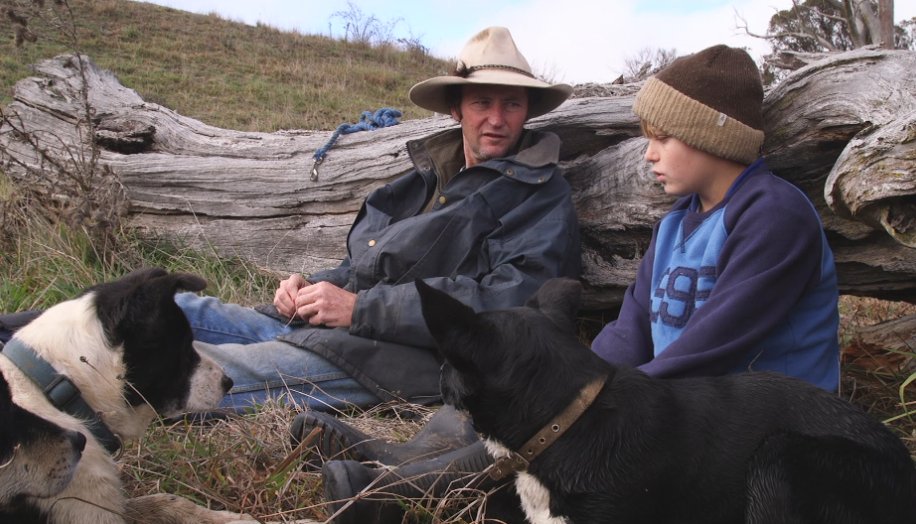
A film about the organisation came out in late October. Called BackTrack Boys, it’s received heaps of attention, having been featured on Conversations with Richard Fidler, talked about on Sunrise, and won Best Documentary at Byron Bay Film Festival. There are several screening events taking place around WA, along with a community screening program with opportunities for people to host their own screening or fundraiser.